


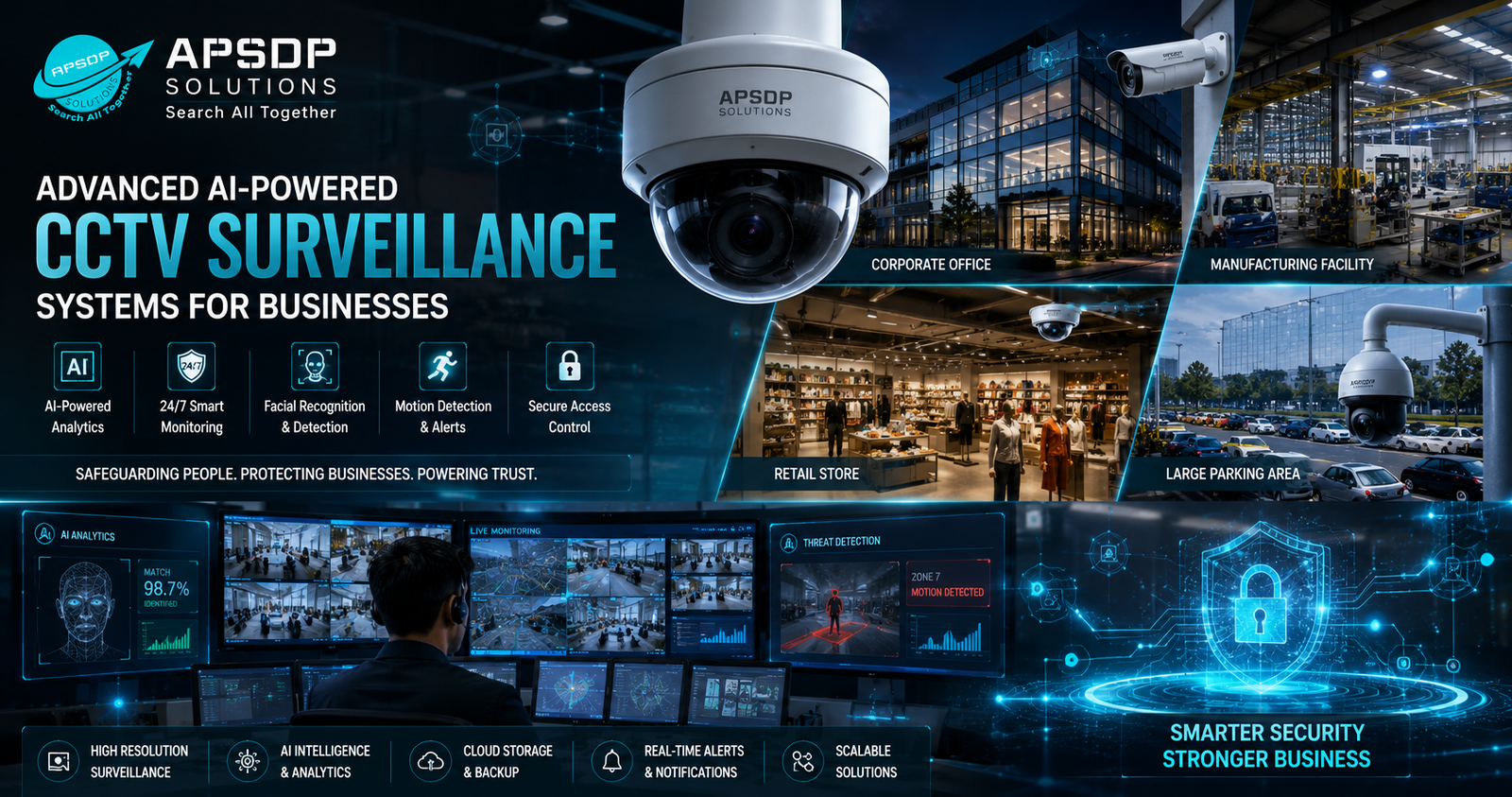
How to Choose the Right CCTV Surveillance System for Your Bu
Introduction
In today's business environment, security is no longer optional—it's an essential investment. Whether you operate a corporate office, manufacturing unit, retail store, warehouse, hotel, hospital, educational institution, or commercial complex, protecting your employees, customers, assets, and property should always be a top priority.
Businesses across Odisha are increasingly adopting advanced CCTV surveillance systems to strengthen workplace security, monitor daily operations, reduce theft, and improve overall safety. Modern CCTV technology has evolved far beyond simple video recording. Today's intelligent surveillance systems offer AI-powered analytics, remote monitoring, motion detection, facial recognition support, cloud connectivity, and real-time alerts, helping businesses make faster and more informed security decisions.
However, selecting the right CCTV surveillance system can be challenging. With numerous camera types, resolutions, storage options, and installation methods available, choosing the wrong solution can result in unnecessary costs, poor coverage, and future upgrade issues.
This comprehensive buying guide explains everything you need to know before investing in a CCTV surveillance system. You'll learn about different camera types, essential features, installation considerations, and practical tips to help your business choose a solution that matches its operational and security requirements.
Why CCTV Surveillance Matters for Businesses
Every business faces security challenges, regardless of its size or industry. While physical security measures such as gates, locks, and guards remain important, modern surveillance technology adds another layer of protection by providing continuous visual monitoring.
A professionally designed CCTV surveillance system helps businesses:
- Monitor business premises 24/7
- Reduce theft and vandalism
- Improve employee safety
- Protect valuable assets
- Monitor visitor movement
- Strengthen workplace accountability
- Support incident investigations
- Improve operational oversight
Beyond security, surveillance systems can also help managers review workflow, identify operational inefficiencies, and ensure compliance with workplace safety procedures.
For growing businesses, investing in a well-planned CCTV solution is often a long-term decision that contributes to both safety and operational confidence.
Understanding Business Security Risks
Before selecting cameras, it is important to understand what you are trying to protect.
Different industries have different security priorities.
Corporate Offices
Common concerns include:
- Unauthorized entry
- Visitor monitoring
- Data security
- Parking surveillance
- Reception monitoring
- Meeting room protection
Manufacturing Industries
Industrial facilities often require surveillance for:
- Production areas
- Machinery protection
- Worker safety
- Raw material storage
- Dispatch zones
- Loading bays
Warehouses
Warehouse operators typically focus on:
- Inventory protection
- Loading docks
- Entry and exit points
- Vehicle movement
- Restricted areas
Retail Stores
Retail businesses benefit from surveillance by monitoring:
- Customer movement
- Cash counters
- Product shelves
- Entry gates
- Billing areas
- Storage rooms
Educational Institutions
Schools and colleges commonly monitor:
- Classrooms
- Corridors
- Entrances
- Parking areas
- Playgrounds
- Administrative offices
Each business should begin with a proper site assessment to identify vulnerable areas before selecting equipment.
Types of CCTV Cameras
Modern CCTV systems include several camera types, each designed for different applications.
Choosing the correct combination improves coverage and reduces blind spots.
Dome Cameras
Dome cameras are among the most popular indoor surveillance solutions.
They are suitable for:
- Offices
- Schools
- Hospitals
- Reception areas
- Retail stores
- Hotels
Advantages
- Compact design
- Wide viewing angle
- Difficult to determine camera direction
- Professional appearance
- Ceiling-mounted installation
These cameras are ideal where aesthetics and broad indoor coverage are important.
Bullet Cameras
Bullet cameras are easily recognizable because of their cylindrical shape.
They are commonly installed outdoors for long-distance monitoring.
Typical applications include:
- Building entrances
- Parking areas
- Compound walls
- Warehouses
- Industrial premises
Advantages
- Long viewing distance
- Weather-resistant models available
- Excellent outdoor performance
- Easy installation
- Visible deterrent against intruders
PTZ Cameras
PTZ stands for Pan, Tilt, and Zoom.
These advanced cameras can rotate horizontally, move vertically, and zoom into distant objects, either manually or automatically depending on system configuration.
Suitable for:
- Large industrial facilities
- Shopping malls
- Stadiums
- Airports
- Logistics parks
- Campuses
Benefits
- Wide coverage
- Remote control
- Automatic patrol functions
- High zoom capability
- Reduced number of cameras for large spaces
Turret Cameras
Turret cameras combine features of dome and bullet cameras.
Advantages include:
- Flexible viewing angle
- Good low-light performance
- Reduced glare
- Easy maintenance
These cameras are becoming increasingly popular for offices and commercial buildings.
Analog vs IP CCTV Cameras
One of the most important decisions when purchasing a surveillance system is choosing between Analog and IP cameras.
Analog CCTV Cameras
Analog systems transmit video signals through coaxial cables to a DVR (Digital Video Recorder).
Advantages
- Lower initial investment
- Simple installation
- Suitable for small businesses
- Reliable for basic surveillance
Limitations
- Lower image quality compared to IP cameras
- Limited scalability
- Fewer advanced analytics
IP CCTV Cameras
IP cameras transmit digital video through a network and connect to an NVR (Network Video Recorder).
Advantages
- High-resolution video
- Better image clarity
- Remote access
- Intelligent analytics
- Easy expansion
- Advanced cybersecurity options
Although IP systems generally involve a higher initial investment, they often provide greater flexibility and long-term value for businesses planning future growth.
Dome vs Bullet vs PTZ – Which Should You Choose?
There is no universal answer. The right choice depends on your environment and security objectives.
| Camera Type | Best For | Key Benefit |
|---|---|---|
| Dome | Offices, Schools, Hospitals | Wide indoor coverage |
| Bullet | Parking, Entrances, Outdoor Areas | Long-distance monitoring |
| PTZ | Large Campuses, Industries | Pan, tilt, and zoom capabilities |
| Turret | Commercial Buildings | Flexible positioning with strong image quality |
Many businesses use a combination of these camera types to achieve complete coverage.
Essential Features to Consider Before Buying
Selecting a CCTV camera should involve more than comparing prices.
Important features include:
High Resolution
Choose cameras with clear image quality that can capture faces, vehicle numbers, and important details.
Higher resolutions generally provide better clarity, especially when reviewing recorded footage.
Night Vision
Businesses require surveillance around the clock.
Good night vision technology helps cameras continue recording useful footage even in low-light conditions.
Wide Dynamic Range (WDR)
WDR improves image quality in areas with varying lighting conditions, such as entrances where bright sunlight meets darker indoor spaces.
Motion Detection
Modern cameras can begin recording or send alerts when movement is detected, helping reduce unnecessary storage usage and improving response times.
Remote Monitoring
Many surveillance systems allow authorized users to securely monitor live footage from smartphones, tablets, or computers, making it easier to oversee multiple locations while away from the premises.
Weather Resistance
Outdoor cameras should be designed to withstand rain, dust, heat, and other environmental conditions. Look for models with appropriate ingress protection (IP) ratings for outdoor installations.
Audio Support
Where appropriate and permitted by applicable laws, cameras with audio capabilities can provide additional context during incident reviews.
Scalability
As your business grows, your surveillance system should allow additional cameras and features to be integrated without replacing the entire infrastructure.
Planning for future expansion can reduce long-term costs and simplify upgrades.
DVR vs NVR: Understanding CCTV Storage Systems
Choosing the right recording system is just as important as selecting the right cameras. Your recorder determines how footage is stored, managed, and accessed.
DVR (Digital Video Recorder)
A DVR works with analog CCTV cameras and records video transmitted through coaxial cables.
Suitable For
- Small offices
- Retail shops
- Budget-conscious businesses
- Basic surveillance requirements
Advantages
- Cost-effective
- Simple installation
- Reliable for standard monitoring
- Easy maintenance
Considerations
- Limited scalability
- Lower maximum image quality compared to IP systems
- Fewer advanced intelligent features
NVR (Network Video Recorder)
An NVR is designed for IP cameras and records digital video transmitted over a network.
Suitable For
- Corporate offices
- Manufacturing industries
- Hotels
- Educational institutions
- Hospitals
- Warehouses
- Multi-location businesses
Advantages
- Higher video quality
- Flexible network architecture
- Easier expansion
- Advanced analytics support
- Remote management capabilities
If your organization expects future growth or wants advanced surveillance features, an IP camera system with an NVR is generally the more scalable option.
AI-Powered CCTV Features
Modern CCTV systems are no longer limited to recording video. Many commercial solutions now include intelligent features that improve security operations.
Depending on the selected solution, available capabilities may include:
- Human detection
- Vehicle detection
- Motion analytics
- Intrusion detection
- Line-crossing alerts
- Object removal detection
- Object abandonment detection
- Smart search
- Facial recognition integration
- License plate recognition integration
- Mobile notifications
These technologies can help reduce false alarms and allow security teams to focus on meaningful events.
Choosing CCTV Based on Business Type
Every business has different operational requirements. Camera placement, recording duration, and hardware selection should match the environment.
Corporate Offices
Recommended areas:
- Reception
- Main entrance
- Exit points
- Conference room corridors
- Parking area
- Server room entrance
Recommended camera mix:
- Dome Cameras
- Bullet Cameras
- IP-based recording
Manufacturing Industries
Priority areas include:
- Production lines
- Machinery sections
- Raw material storage
- Loading docks
- Warehouse entrances
- Employee access points
Recommended combination:
- Bullet Cameras
- PTZ Cameras
- IP Cameras
- Long-duration storage
Retail Stores
Retail surveillance should cover:
- Billing counters
- Product aisles
- Entry and exit gates
- Stock rooms
- Cash handling areas
This helps improve loss prevention and operational monitoring.
Warehouses
Warehouse security should monitor:
- Inventory racks
- Dispatch areas
- Loading bays
- Vehicle movement
- Restricted storage zones
Wide-angle cameras combined with PTZ units are often effective for large warehouse spaces.
Educational Institutions
Schools and colleges generally monitor:
- Campus entrances
- Administrative blocks
- Corridors
- Parking
- Library entrances
- Common areas
Camera placement should always respect applicable privacy requirements and institutional policies.
Indoor vs Outdoor CCTV Cameras
Indoor and outdoor environments require different equipment.
Indoor Cameras
Ideal for:
- Offices
- Reception areas
- Meeting rooms
- Classrooms
- Retail spaces
Important features:
- Compact design
- Wide viewing angle
- Clear indoor image quality
Outdoor Cameras
Suitable for:
- Building entrances
- Parking areas
- Factory compounds
- Perimeter walls
- Loading zones
Important features:
- Weather-resistant housing
- Night vision
- Dust protection
- Heat resistance
- Long-range monitoring
Selecting cameras designed for the intended environment helps ensure reliable long-term performance.
CCTV Camera Placement Best Practices
Proper placement is essential for maximizing the effectiveness of any surveillance system.
Recommended practices include:
- Cover all entry and exit points.
- Eliminate blind spots where practical.
- Monitor high-value assets.
- Protect cash handling areas.
- Ensure adequate lighting for night surveillance.
- Mount cameras securely.
- Position cameras to capture clear facial details where appropriate.
- Avoid obstructions such as trees, banners, or equipment.
A professional site survey helps determine optimal camera locations before installation.
Common CCTV Buying Mistakes
Many businesses focus only on price, overlooking factors that affect long-term performance.
Common mistakes include:
Buying the Cheapest Cameras
Low-cost equipment may not provide the image quality, reliability, or support required for commercial environments.
Ignoring Future Expansion
Businesses often need additional cameras as operations grow.
Selecting scalable systems can reduce future upgrade costs.
Poor Camera Placement
Even high-quality cameras cannot deliver effective coverage if installed incorrectly.
Choosing Incorrect Camera Types
Using indoor cameras outdoors or long-range cameras in confined indoor spaces can reduce performance.
Ignoring Storage Requirements
Businesses should determine how long recorded footage needs to be retained based on operational requirements and applicable regulations.
Skipping Professional Installation
Improper installation can result in:
- Blind spots
- Poor image angles
- Cable issues
- Network problems
- Reduced system reliability
Professional planning helps ensure the surveillance system performs as intended.
Why Professional CCTV Installation Matters
A professionally designed surveillance solution includes much more than installing cameras.
Professional implementation typically involves:
- Site survey
- Risk assessment
- Camera positioning
- Coverage planning
- Cable management
- Network configuration
- Recording setup
- Mobile viewing configuration
- User training
- System testing
This approach helps improve both security coverage and long-term system reliability.
Why Choose APSDP Solutions
APSDP Solutions provides end-to-end CCTV surveillance solutions for businesses across Odisha.
Services include:
- Security consultation
- Site assessment
- CCTV system planning
- Product recommendation
- Professional installation
- System configuration
- User training
- Preventive maintenance
- Technical support
- System upgrades
Rather than recommending a one-size-fits-all solution, the focus is on designing surveillance systems that match each organization's operational needs, infrastructure, and future expansion plans.
Frequently Asked Questions
Which CCTV camera is best for offices?
The ideal solution depends on office size, coverage requirements, and security objectives. Many offices benefit from a combination of indoor dome cameras and outdoor bullet cameras.
Should I choose Analog or IP cameras?
Analog systems are suitable for basic surveillance and smaller budgets, while IP systems generally provide higher image quality, better scalability, and more advanced features.
How many cameras does my business need?
The number depends on building layout, entry points, critical assets, and security goals. A professional site survey can help determine appropriate coverage.
Can I monitor my CCTV remotely?
Many modern systems allow secure remote viewing through authorized mobile and desktop applications.
How long should footage be stored?
Storage duration depends on business requirements, available storage capacity, and applicable legal or regulatory obligations.
Are outdoor cameras weather resistant?
Many commercial outdoor cameras are designed to withstand rain, dust, and varying temperatures. Always verify the manufacturer's environmental ratings.
Do CCTV systems work at night?
Most commercial cameras include infrared or other low-light technologies that support surveillance in dark environments.
Can CCTV integrate with other security systems?
Yes. Many systems can integrate with access control, alarm systems, intercoms, and other security technologies, depending on compatibility.
How often should CCTV systems be maintained?
Regular inspections, cleaning, software updates, and health checks help maintain performance and reliability.
Why should I work with APSDP Solutions?
APSDP Solutions offers consultation, system planning, installation, configuration, and ongoing support to help businesses implement surveillance solutions aligned with their operational needs.
Conclusion
A CCTV surveillance system is an important investment in protecting people, property, and business operations. Choosing the right solution requires more than comparing camera prices—it involves understanding your security objectives, selecting appropriate equipment, planning camera placement, and ensuring professional implementation.
By carefully evaluating camera types, recording systems, intelligent features, storage options, and future expansion requirements, businesses can build a surveillance solution that provides long-term value and dependable security.
Whether you operate an office, manufacturing facility, warehouse, educational institution, retail outlet, or hospitality business, investing in a thoughtfully designed CCTV system can improve visibility, enhance operational oversight, and strengthen overall workplace security.
Request a Free Site Survey
Every business has unique security requirements.
If you're planning to install or upgrade a CCTV surveillance system, APSDP Solutions can help assess your premises, recommend suitable solutions, and provide professional installation and support.
Request a Free Site Survey today and discover how the right CCTV surveillance system can help protect your business, employees, and valuable assets while supporting safer and more efficient daily operations.